 Mehedi Hasan
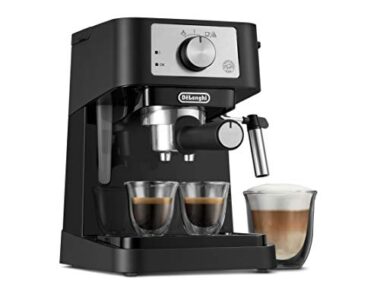
To make espresso, fill the water tank, fill the portafilter with ground coffee, tamp it level, lock it in, and press the brew button until your cup has about 2 ounces of coffee. Most DeLonghi machines take 25 to 40 seconds to pull a shot once they’re hot. A cappuccino or latte needs the same shot plus steamed milk, which adds about a minute.
The exact steps change with your model, your beans, and whether your machine has a built-in grinder. The rest of this page shows how to find the right settings for yours.
Who this is really for
This guide targets three distinct users. First, the beginner who just unboxed a DeLonghi espresso machine and has never pulled a shot. You need the buttons explained in order, with no assumptions about your prior experience. We define every step from the initial water flush to the final extraction.
Second, the frustrated owner whose coffee consistently tastes weak, watery, or bitter. You need the specific adjustments that fix each flavor profile. If your shot pulls in under twenty seconds, your grind is too coarse; if it takes over forty seconds, your grind is too fine. Adjust your dose by one gram at a time to find the sweet spot.
Third, the home barista who wants cafe-style milk drinks. You need to know exactly when to introduce air into the milk and when to stop the steam wand.
This article assumes you use a standard DeLonghi pump espresso machine with a removable water tank and a portafilter you fill yourself. It doesn’t cover super-automatic models that grind and tamp for you, nor does it apply to capsule machines.
If your machine features a built-in grinder, consult its specific manual for grind settings before following the steps here. A common mistake is adjusting the grind dial while the machine is off. This can jam the burrs and permanently damage the motor. Always adjust your grind size while the grinder is off or, if your manual specifies, while it’s running to prevent jamming the burrs.
If you have a pressurized basket, you can use pre-ground coffee from the grocery store. If you have a non-pressurized basket, you must use a burr grinder to achieve the necessary consistency. If your coffee flows out like tea, stop immediately. You’re likely using stale beans, which lack the carbon dioxide needed to create crema. Switch to fresh beans roasted within the last month to see an instant improvement in texture.
What decides your espresso
Four things change the cup more than anything else.
The grind size. Too fine and the shot runs slow and tastes burnt; too coarse and it runs fast and tastes sour. You want a grind that feels like fine table salt. Check your machine’s manual for the recommended starting setting, then adjust by one notch at a time.
The dose. Most single baskets take about 7 to 9 grams of coffee; double baskets take about 14 to 18 grams. Weigh your dose on a kitchen scale if you have one, or use the measuring scoop that came with the machine and level it off.
The tamp. Press the grounds down firmly and level until the surface is flat. An uneven tamp makes water find a weak spot and run through too fast, which gives you a thin, sour shot.
The water. Fill the tank with cold, fresh water. Hard water leaves scale inside the boiler, which slows heating and changes the taste. If your tap water is very hard, use filtered water or descale more often.
How to use your DeLonghi espresso machine
- Fill the water tank with cold fresh water and push it back into place until it clicks.
- Turn the machine on and wait for the ready light to stop flashing. This usually takes 30 to 60 seconds.
- Place a cup under the portafilter spouts and run a blank shot through for 5 to 10 seconds to heat the group and the cup.
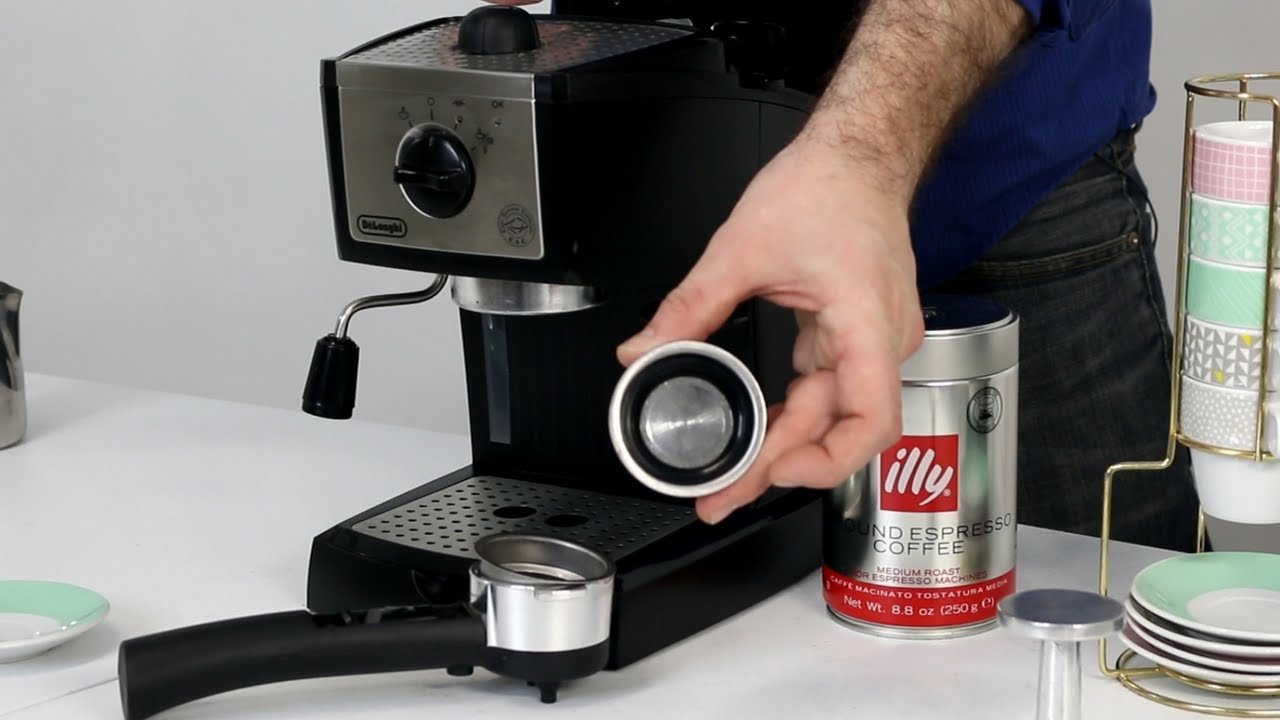
- Dry the portafilter basket, then fill it with ground coffee. Use about 7 to 9 grams for a single shot or 14 to 18 grams for a double.
- Level the grounds with your finger, then tamp down firmly until the surface is flat and even.
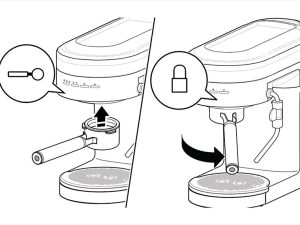
- Lock the portafilter into the group head by turning it to the right until it stops.
- Press the single or double shot button. Stop when the cup holds about 1 to 2 ounces of espresso, usually after 25 to 35 seconds.
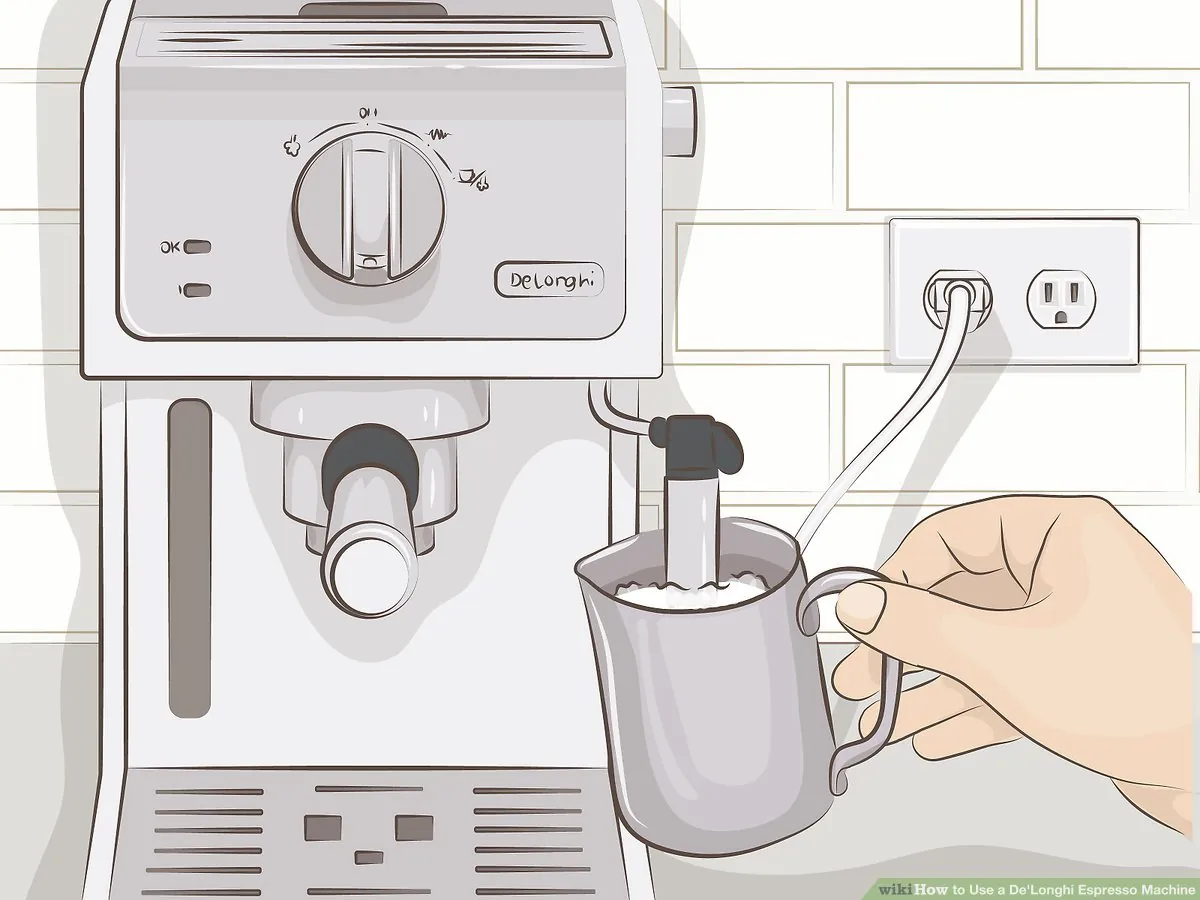
- If you want milk, turn the steam dial, wait for the steam light, then hold the steam wand just below the milk surface for 20 to 40 seconds until the milk is hot and foamy.
- Turn the steam dial off, wipe the wand with a damp cloth, and purge it for 2 seconds.
- Empty the portafilter, rinse the basket, and wipe the drip tray.
The judgement call is the shot time. A good shot starts with a few drops, turns into a thin stream with light brown crema, and finishes in about 25 to 35 seconds. If it gushes out in 15 seconds, your grind is too coarse or your tamp too light. If it dribbles for 50 seconds, your grind is too fine or your tamp too hard.
The variations at a glance
| Situation | What to do | What it takes | What to watch for |
|---|---|---|---|
| First shot of the day | Run a blank shot first | 10 seconds | Cold group makes sour coffee |
| Single shot | Use 7 to 9 grams | 25 to 35 seconds | Thin crema means under-dosed |
| Double shot | Use 14 to 18 grams | 25 to 35 seconds | Dark, fast stream means over-tamped |
| Cappuccino or latte | Brew shot, then steam milk | 1 to 2 minutes | Milk over 150°F tastes burnt |
| Hard tap water | Use filtered water | No extra time | Scale slows the machine |
| Built-in grinder model | Set grind per manual | 1 extra minute | Grinder settings differ by bean |
| Machine not heating | Descale per manual | 20 to 30 minutes | Flashing lights need service |
What good espresso looks like
Preparation and timing
Experienced users weigh the dose instead of guessing with a scoop. They distribute the grounds evenly before tamping, so the puck is level from edge to edge. They lock the portafilter in straight and brew immediately, because grounds left sitting in a hot basket start to taste stale within a minute. They watch the stream, not the clock alone, and stop the shot when it turns pale and thin.
What they leave alone
They don’t tamp twice, which packs the puck too tight and chokes the flow. They don’t leave the steam wand sitting in milk, which burns the milk and cakes the wand. They don’t reuse wet grounds for a second shot. They empty the drip tray after every session, because a full tray drips back onto the machine.
What goes wrong and how to fix it
| What you notice | What it usually means | What to do first | How to stop it again |
|---|---|---|---|
| No coffee comes out | Empty tank or blocked spout | Refill tank, rinse spout | Keep tank filled |
| Shot runs in under 20 seconds | Grind too coarse | Adjust grinder finer | Weigh each dose |
| Shot takes over 40 seconds | Grind too fine | Adjust grinder coarser | Tamp with even pressure |
| Coffee tastes sour | Under-extracted | Use finer grind or more coffee | Check water temperature |
| Coffee tastes burnt | Over-extracted | Use coarser grind or less coffee | Stop the shot sooner |
| No steam | Steam not ready or wand blocked | Wait for light, purge wand | Wipe wand after each use |
| Leaking at the portafilter | Not locked in or dirty seal | Re-lock portafilter, clean seal | Lock straight each time |
The rules that apply
DeLonghi publishes user manuals for each model on its support site, and those manuals carry the safety rules for your machine. Read the manual before first use, especially the sections on descaling and steam-wand safety.
Descaling removes mineral scale from the internal boiler. DeLonghi recommends performing this process when the machine prompts you or when you notice the steam pressure weakening. If you live in an area with hard water, ignore the machine’s timer and descale based on your specific usage and the guidelines found in your owner’s manual. Failing to do so causes mineral buildup that permanently clogs the solenoid valve, a repair that often exceeds the cost of a new machine.
The machine may also carry an EN 60335 safety mark for household appliances. This certification confirms the unit meets specific electrical insulation standards. Never use the machine if the power cord shows fraying or if the plug feels hot to the touch during operation.
If your model needs repair, contact DeLonghi customer service or an authorized service center. Opening the housing yourself voids the warranty immediately. Internal components like the thermoblock operate at high temperatures and hold residual electrical charges even after the unit is unplugged.
If the machine leaks water from the base, stop using it and unplug it immediately. A leak near the internal pump can cause a short circuit or fire. If the machine simply fails to heat, the issue is likely a tripped thermal fuse. Always use genuine replacement parts, as third-party components often lack the necessary heat-resistant ratings required for high-pressure espresso systems.
What it costs you
A shot of espresso at home costs only the coffee beans, water, and a little electricity — usually far less than a café shot. The real cost is time: expect 3 to 5 minutes for your first few drinks, dropping to about a minute once you know the machine. Descaling adds 20 to 30 minutes based on your usage and the recommendations in your owner’s manual, depending on how hard your water is.
Ignoring this maintenance costs you the machine’s pressure stability, which ruins the extraction quality permanently.
A kitchen scale and a tamper cost little if your machine didn’t include them. Invest in a scale that measures to the tenth of a gram; precision is the only way to replicate a successful shot. Without this, you’re guessing, and you’ll waste roughly half a pound of beans every week trying to chase a flavor profile you can’t measure.
The biggest hidden cost is wasted beans while you learn the grind. Change one setting at a time and keep notes. If your shot pulls in under 20 seconds, the grind is too coarse; if it takes longer than 35 seconds, it’s too fine.
If you’re using dark roasts, start with a coarser setting to avoid bitter, astringent flavors. If you prefer light roasts, you must grind finer and use a higher water temperature to extract the inherent acidity. If you can’t get a balanced cup after three adjustments, stop and clean your burrs. Old oils trapped in the machine will sour even the most expensive beans.
Keeping it right afterwards
Empty the drip tray and the grounds container after every session. Rinse the portafilter and basket under hot water, and wipe the steam wand immediately after steaming milk so milk residue doesn’t harden on it.
If your water hardness exceeds 150 parts per million, descale based on your usage and the guidelines found in your owner’s manual regardless of the machine’s automated prompts. Using high-mineral water forces internal valves to work harder, eventually leading to a permanent pressure drop that simple descaling can’t fix.
If you pull more than four shots daily, commit to a backflush with a specialized detergent as often as your owner’s manual suggests to prevent rancid coffee oils from coating the group head.
Store the machine with the tank empty if you won’t use it for more than a week. Leaving stagnant water inside invites bacterial growth and scale buildup that ruins the flavor of your first cup upon return. If you notice the brew time stretching beyond 30 seconds for a standard double shot, the shower screen is likely clogged with fine sediment. Remove it with a screwdriver and soak it in hot water for ten minutes.
The sign it needs attention is slower brewing, weaker steam, or a flashing descale light. Many users ignore these warnings until the pump becomes audibly louder or erratic. This mistake often results in a blown thermal fuse, a repair that costs significantly more than a bottle of descaling solution.
If the machine feels sluggish, check the steam tip first; a single dried milk droplet can restrict airflow enough to mimic a failing boiler. If the flow remains weak after cleaning the tip, the internal lines require a professional-grade descaling cycle.
When this is the wrong approach

If your primary goal is a consistent morning routine with zero cleanup, a capsule machine is the superior choice. These systems brew from sealed pods, eliminating the need for tamping or clearing spent grounds. If you prefer the convenience of an all-in-one process but dislike manual labor, purchase a super-automatic espresso machine. These units handle grinding, dosing, and tamping internally, saving you the physical effort of dialing in your shots.
Don’t attempt to troubleshoot your DeLonghi if the machine fails to heat, leaks water, or displays persistent error lights. These symptoms often indicate a failure in the heating element or an internal pressure seal breach. Attempting a DIY repair on these components risks electrical shock or high-pressure steam burns. Instead, stop using the machine immediately and contact authorized service centers.
You can distinguish between a user-fixable issue and a technical failure by checking the drip tray and power supply. If the machine simply lacks pressure or produces a weak shot, check your grind size before calling for help. If the water is too coarse, the espresso will run through the portafilter in under 15 seconds, resulting in a sour, watery cup.
If the shot takes longer than 35 seconds to pull, your grind is too fine and is clogging the basket. If you have adjusted the grind and the machine still fails to produce flow, the pump has likely failed. In that case, professional repair is your only path forward.
Frequently asked questions
How long does a DeLonghi espresso machine take to heat up?
Most models are ready in 30 to 60 seconds after you switch them on. Wait for the ready light to stop flashing before you brew.
How much coffee should I put in the portafilter?
Use about 7 to 9 grams for a single shot and 14 to 18 grams for a double shot. Level the grounds before you tamp.
How long should the shot run?
Aim for 25 to 35 seconds from the moment you press the button until the cup holds 1 to 2 ounces. Stop sooner if the stream turns pale and thin.
Is it safe to leave water in the tank?
Fresh water is fine for daily use, but empty the tank if you won’t use the machine for more than a week. Stale water can affect the taste.
What happens if I don’t descale?
Scale builds up in the boiler, slows heating, weakens steam, and can eventually stop the machine. Descale when the light comes on or steam drops.
Does the grind size really matter?
Yes. Too fine makes the shot slow and bitter; too coarse makes it fast and sour. Adjust one notch at a time until the shot runs in 25 to 35 seconds.
Conclusion
Fill the tank, dose and tamp your coffee, lock in the portafilter, and press the brew button. Expect about 25 to 35 seconds for a shot, and a minute more if you’re steaming milk. If the machine leaks, won’t heat, or shows an error light, stop and contact DeLonghi service.

 Mehedi Hasan