 Mehedi Hasan
Cleaning a DeLonghi espresso machine means flushing away coffee oils, rinsing milk residue, descaling mineral buildup, and wiping down the brewing group so every shot tastes as good as the first one you pulled. Because espresso machines sit on your counter and touch food and drink, keeping them clean is also a basic food-safety habit that prevents stale oils from turning rancid and keeps milk frothers from clogging.
Key Takeaways
- Rinse the portafilter and wipe the steam wand after every shot to stop coffee oils and milk from hardening.
- Empty and wash the drip tray and water tank at least once a week with warm, soapy water.
- Run a backflush cycle with blind filter and cleaning powder if your DeLonghi model has a three-way solenoid valve.
- Descale every two to three months, or whenever the machine’s descale light comes on, using DeLonghi descaler or a citric-acid solution.
- Check your specific model’s manual before using any cleaning product, because not every DeLonghi espresso machine accepts backflushing chemicals.
Daily Cleaning Routine
Rinse the Portafilter and Basket
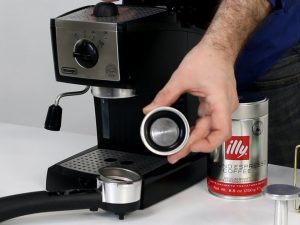
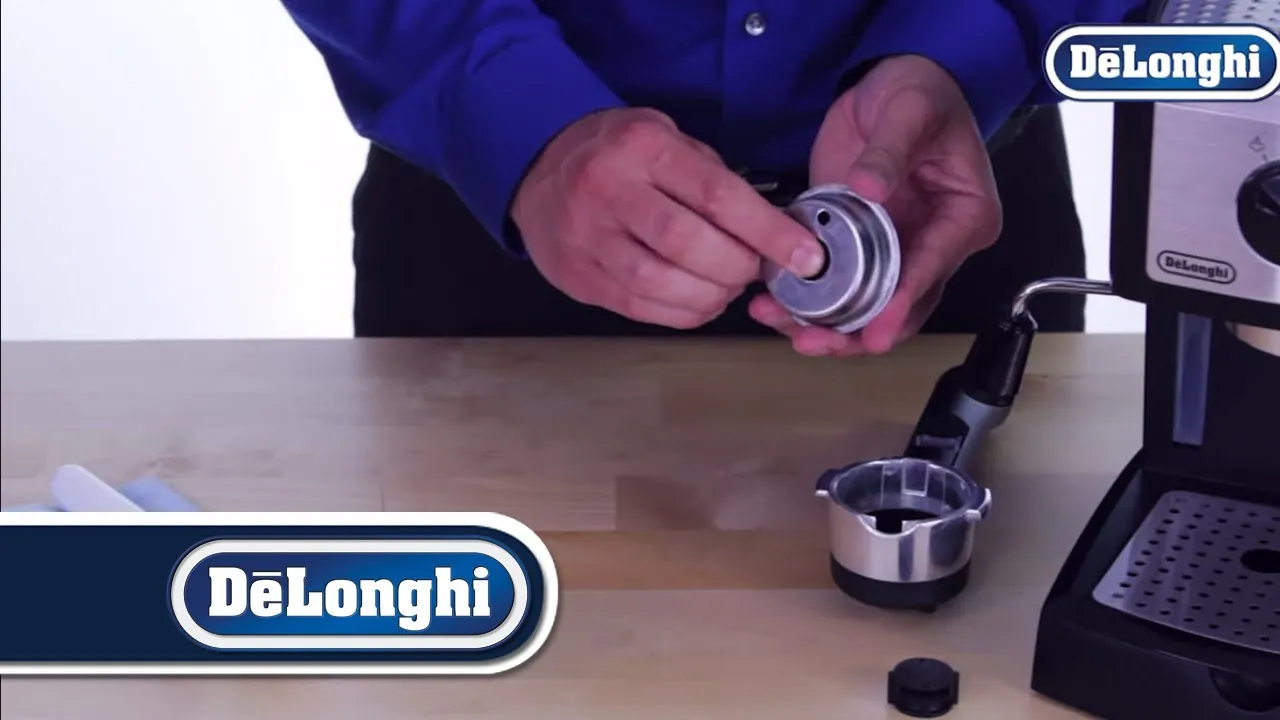
After you pull each shot, knock out the used puck and rinse the portafilter under hot running water. Scrub the basket with a nylon brush to clear out fine grounds that cling to the holes. Dry the basket with a clean cloth before locking the portafilter back in place. Leaving wet grounds inside the basket overnight invites mold and makes the next extraction taste sour.
Wipe the Steam Wand
The steam wand collects milk every time you froth a latte or cappuccino. Wipe it immediately after steaming with a damp cloth, then purge steam for two or three seconds to blow out any milk left inside the tip. If milk dries inside the wand, it can block the steam holes and force the machine to work harder, which shortens the life of the heating element.
Empty the Drip Tray
Slide out the drip tray and dump the water and coffee residue into the sink. Wash the tray and its grid with warm water and dish soap, then dry it before sliding it back in. A full drip tray can overflow onto your counter and create a slip hazard, and the warm, damp environment is exactly where bacteria like to grow.
Weekly Cleaning Tasks
Wash the Water Tank
Remove the water tank and rinse it out. Fill it with warm water and a few drops of dish soap, swish it around, and scrub the inside with a soft sponge. Rinse thoroughly so no soap film remains, because even a small amount of detergent can ruin the crema on your next espresso. Refill with fresh water before brewing.
Clean the Brew Group (Removable Models)
Some DeLonghi espresso machines have a removable brew group that slides out from the side or back. Take it out once a week and rinse it under lukewarm running water. Don’t use soap on the brew group unless the manual specifically allows it, because soap residue can taint the coffee. Let it air-dry completely before reinstalling it.
Wipe the Exterior
Use a soft, slightly damp microfiber cloth to wipe the machine’s body, the cup warming tray, and the control panel. Avoid abrasive sponges or harsh chemical cleaners, which can scratch the finish or leave residue that ends up in your cup. Pay special attention to the area around the group head, where drips tend to collect.
Monthly Deep Cleaning
Backflush the Group Head
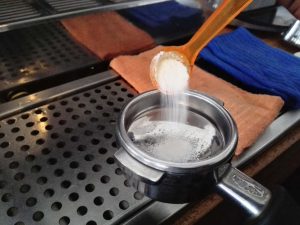
If your DeLonghi espresso machine has a three-way solenoid valve and a blind filter basket, backflush it once a month. Insert the blind filter into the portafilter, add a small amount of espresso machine cleaning powder, lock it in, and run the pump for ten seconds, then stop for ten seconds. Repeat five or six times, then rinse thoroughly and run plain water through until no suds remain.
Not every DeLonghi model is designed for chemical backflushing. Running cleaning powder through a machine that lacks a relief valve can build pressure and damage internal parts, so check your manual first.
Pro Tip: Use a dedicated espresso cleaning powder rather than dish soap for backflushing. Dish soap creates too much foam and is difficult to rinse out completely.
Clean the Shower Screen
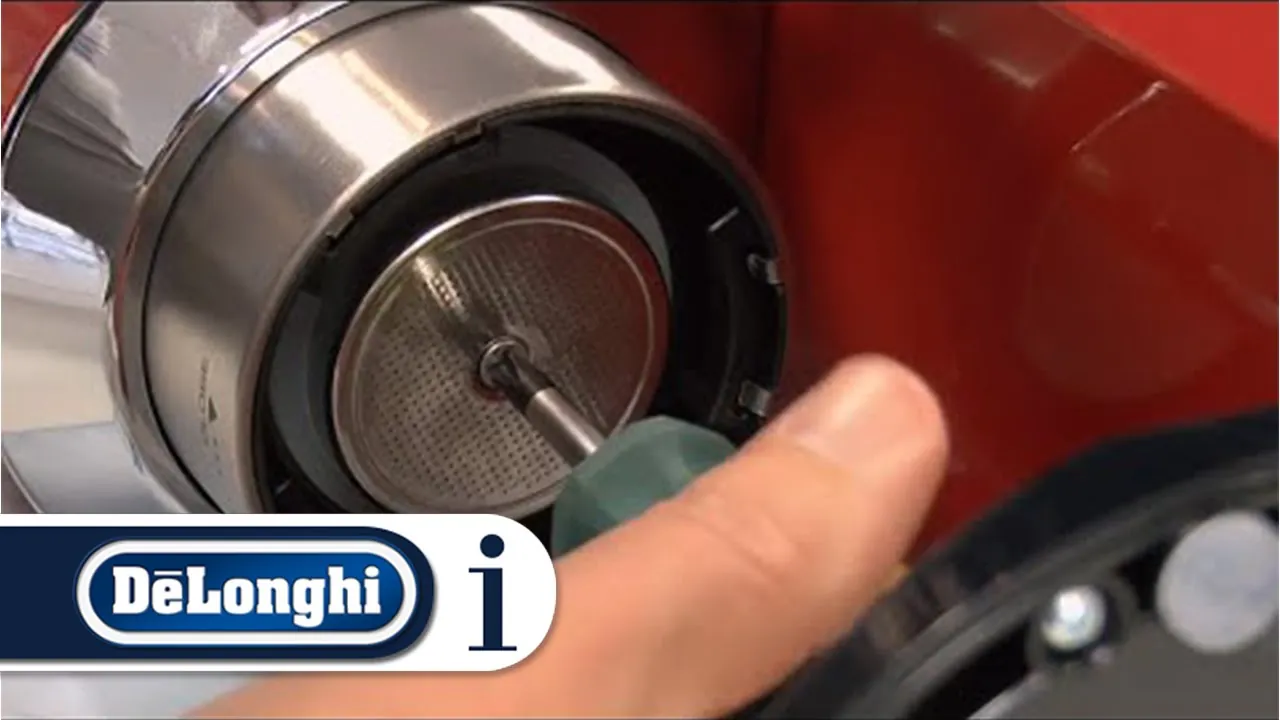
The shower screen sits above the group head and sprays water evenly over the coffee puck. Over time, coffee oils build up on its surface. Remove it if your model allows, soak it in hot water with cleaning powder, and scrub it with a soft brush. Reinstall it securely before brewing again.
Descaling Your DeLonghi Espresso Machine
Why Descaling Matters
Tap water contains calcium and magnesium that form limescale inside the boiler and heating elements. Limescale insulates the heating element, so the machine takes longer to reach brewing temperature and may never get hot enough for proper extraction. Severe scale can block water lines entirely and trigger error codes.
When to Descale
Most DeLonghi espresso machines have a descale indicator light or an on-screen message. As a general rule, descale every two to three months if you use the machine daily. If you have very hard water, you may need to descale every month. If you use filtered or bottled water, you can stretch the interval to four months.
Descaling Step by Step
- Empty the drip tray and place a large container under the steam wand and group head.
- Fill the water tank with fresh water mixed with the recommended amount of DeLonghi descaler or a citric-acid descaling solution.
- Turn the machine on and enter descaling mode according to your model’s instructions—usually by holding a button or turning a dial.
- Run the solution through the steam wand and group head in short bursts until the tank is empty.
- Rinse the tank thoroughly, refill with fresh water, and run two full tanks of plain water through the machine to flush out any descaler residue.
Warning: Never use vinegar to descale a DeLonghi espresso machine unless the manual explicitly permits it. Vinegar can leave a lingering smell and may damage seals or metal components inside the boiler.
Milk System Cleaning
Frothing Wand Maintenance
After every milk-based drink, wipe the wand and purge steam. Once a week, soak the steam wand tip in warm water with a drop of dish soap for ten minutes, then scrub the tip holes with a thin cleaning needle or pin. Rinse well and purge steam before using it again.
Automatic Milk Carafe
If your DeLonghi model has an automatic milk carafe or LatteCrema system, disassemble it daily and wash all removable parts in warm, soapy water. Run the machine’s automatic cleaning cycle if it has one, usually initiated by pressing a milk-clean button. Milk proteins dry quickly and form a film that clogs the frothing nozzle, so don’t skip this step even if you only made one latte.
Cleaning Schedule at a Glance
| Task | Frequency | What You Need |
|---|---|---|
| Rinse portafilter and basket | After every shot | Hot water, nylon brush |
| Wipe and purge steam wand | After every steaming | Damp cloth |
| Empty and wash drip tray | Daily or every two days | Dish soap, sponge |
| Wash water tank | Weekly | Dish soap, soft sponge |
| Wipe exterior | Weekly | Microfiber cloth |
| Rinse removable brew group | Weekly | Lukewarm water |
| Backflush group head | Monthly (if applicable) | Blind filter, cleaning powder |
| Clean shower screen | Monthly | Hot water, cleaning powder, brush |
| Descale machine | Every 2–3 months | Descaling solution, fresh water |
| Clean milk carafe parts | Daily (if used) | Dish soap, water |
Troubleshooting Common Cleaning Issues
Machine Tastes Like Soap
If your espresso tastes soapy, you probably used dish soap on the brew group or didn’t rinse thoroughly after backflushing. Run three or four tanks of plain water through the machine and pull a few discard shots until the taste disappears. Avoid soap on internal brewing parts unless the manufacturer specifically approves it.
Descale Light Won’t Turn Off
After descaling, some DeLonghi models require you to exit descaling mode manually or reset the machine by turning it off and on. Consult your model’s manual for the exact button sequence. If the light stays on after a full rinse cycle, the machine may not have detected enough water flow, which can happen if the tank wasn’t seated properly.
Weak Steam Pressure
Weak steam often means the steam wand tip is blocked with dried milk. Soak the tip in warm water and clear the holes with a cleaning pin. If pressure is still low, the machine may need descaling, because scale inside the boiler restricts steam production.
Water Leaking from the Group Head
A leaking group head usually means the portafilter isn’t locked in tightly or the group gasket is worn. Clean the gasket area with a brush to remove grounds that prevent a good seal. If the leak continues, the gasket may need replacement, which is a job for a technician or a confident DIYer with the right part.
Tools and Products to Keep Handy
- Nylon group brush for scrubbing baskets and screens
- Blind filter basket for backflushing
- Espresso machine cleaning powder
- DeLonghi descaler or citric-acid descaling solution
- Microfiber cloths
- Steam wand cleaning pin or needle
- Dish soap (for drip tray and exterior only)
Frequently Asked Questions
Can I use vinegar to descale my DeLonghi espresso machine?
Vinegar isn’t recommended for most DeLonghi espresso machines because it can leave a strong odor and may damage internal seals or metal parts. Use DeLonghi descaler or a citric-acid solution instead, and always follow the instructions in your specific model’s manual.
How often should I clean the steam wand?
Wipe the steam wand with a damp cloth and purge steam after every single use. Give it a deeper soak in warm, soapy water once a week to clear out dried milk from the tip holes.
Do all DeLonghi espresso machines need backflushing?
No. Only models with a three-way solenoid valve and a blind filter basket are designed for backflushing with cleaning powder. Check your manual before adding any cleaning chemical to the group head.
What happens if I never descale my espresso machine?
Limescale builds up inside the boiler and heating elements, which slows heating, reduces water flow, and can eventually cause the machine to stop working or display an error code. Regular descaling extends the life of the machine and keeps brewing temperature stable.
Can I put the drip tray in the dishwasher?
Many DeLonghi drip trays and grids are dishwasher-safe, but you should verify this in your model’s manual. High heat and harsh dishwasher detergent can warp some plastic parts or wear down coatings over time.
Why does my espresso taste sour after cleaning?
Sourness after cleaning usually means soap residue is left in the brew group or portafilter basket. Rinse all parts thoroughly with hot water and pull a few discard shots before drinking your espresso.
Conclusion
Keep your machine on a regular cleaning rhythm and it will reward you with better-tasting espresso and fewer repair bills. Start today by pulling out the drip tray, giving it a quick wash, and wiping down the steam wand after your next shot.

 Mehedi Hasan