 Mehedi Hasan
Cleaning an espresso machine removes coffee oils and mineral buildup that make espresso taste bitter and weak. Backflushing the group head with a blind basket and cleaner clears out old grounds, while descaling dissolves scale inside the boiler and steam wand. How often you do this depends on how many shots you pull each day and how hard your water is.
The exact title phrase is how to clean espresso machine, and the rest of this page tells you what changes that answer for different machines and water types.
Who this page serves
Three kinds of readers look for information on cleaning an espresso machine. The first has just bought a machine and has never cleaned it beyond rinsing the portafilter. The second makes several shots a day and has noticed bitter-tasting espresso or weak steam.
They need the backflushing and descaling steps, plus the warning signs that tell them they have waited too long. The third lives in a hard-water area and wants to know if descaling is really necessary, and how to tell when scale has built up inside the boiler.
This page serves the first two readers best. It assumes you have a home espresso machine with a removable portafilter and a group head, and that you’re comfortable wiping surfaces and running water through the machine. It doesn’t serve people with super-automatic machines that have built-in cleaning cycles, or anyone whose machine is leaking, not heating, or making strange noises — those problems need a technician, not a cleaning routine.
What decides how often to clean
The amount of coffee you make each day moves the answer more than anything else. A machine pulling two or three shots daily builds up coffee oils fast and needs backflushing with cleaner, though the frequency depends on use and the owner’s manual is the authority.
A machine used once or twice a week requires less frequent backflushing. You can check where you stand by looking at the portafilter basket after a shot — if it holds oily residue or the shot pours unevenly, it’s time to backflush.
Water hardness decides the descaling schedule. Hard water leaves scale inside the boiler and steam wand, which blocks water flow and makes the machine take longer to heat. Soft water means scale builds slowly, and the frequency of descaling depends on use as specified in the owner’s manual. Check your kettle or the inside of your water tank for white crusty deposits — that’s the same scale collecting inside your espresso machine.
The machine type matters too. Machines with a three-way solenoid valve need backflushing to clear the valve and group head. Machines without that valve shouldn’t be backflushed with a blind basket, because pressure has nowhere to go. Read your manual to find out which kind you own before you start.
The thing people get wrong most often is assuming that rinsing the portafilter under the tap counts as cleaning. It removes grounds, but it doesn’t remove the stale coffee oil that coats the group head and goes rancid, and that oil is what makes fresh espresso taste sour and flat.
How to clean your espresso machine
-
Remove the portafilter and wipe the basket and spouts with a clean, dry cloth. Knock out the used puck into the trash, not the sink, so grounds don’t clog your drain.
-
Rinse the basket under hot running water and scrub it with a soft nylon brush. Don’t use soap on the basket unless it’s very greasy, and rinse away every trace of it before the next shot.
-
Wipe the group head gasket and shower screen with a damp cloth. If the shower screen is removable, unscrew it by hand and soak it in hot water for five minutes, then brush away any stuck grounds.
-
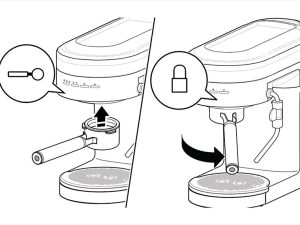
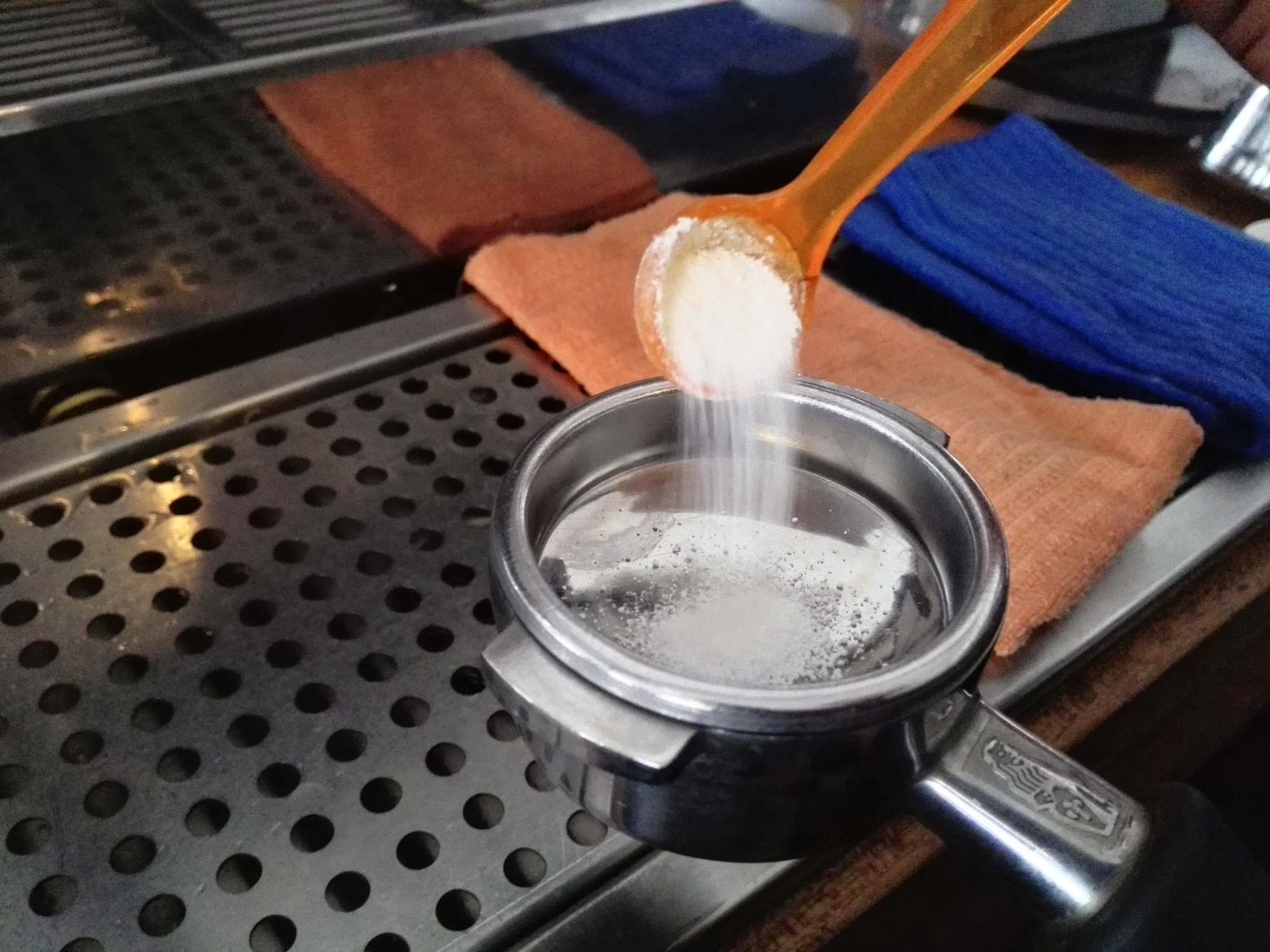
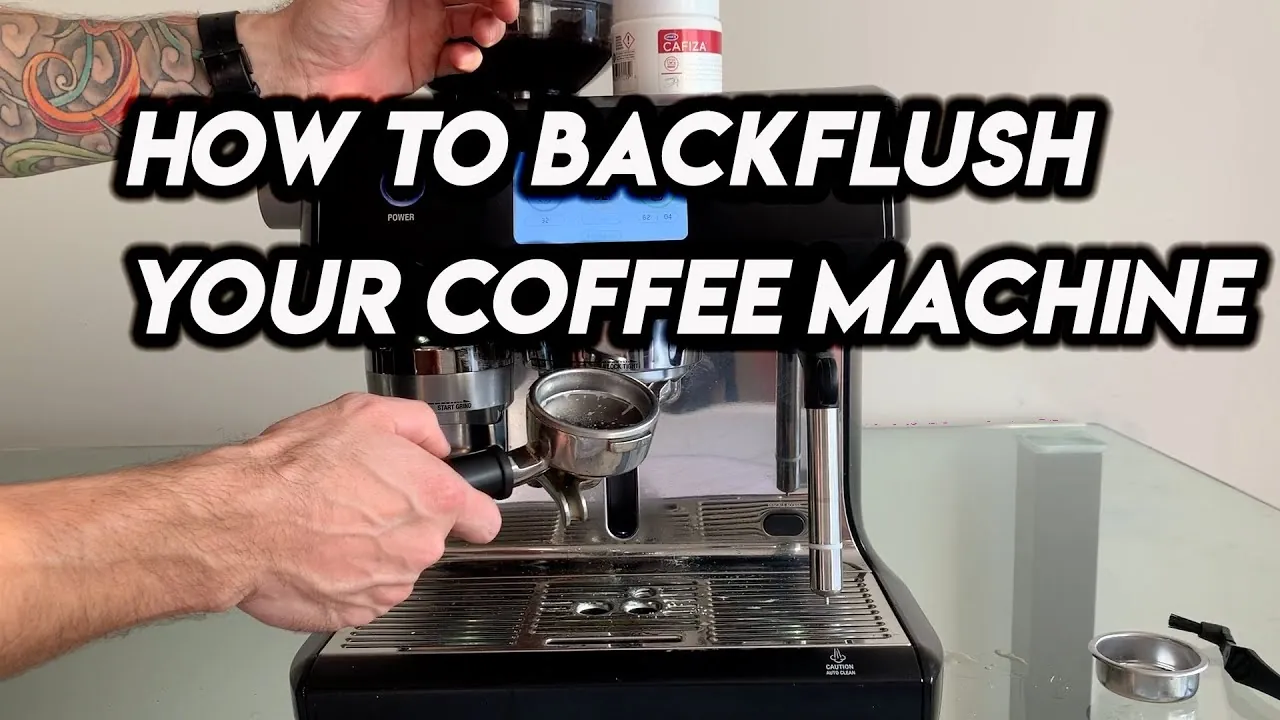
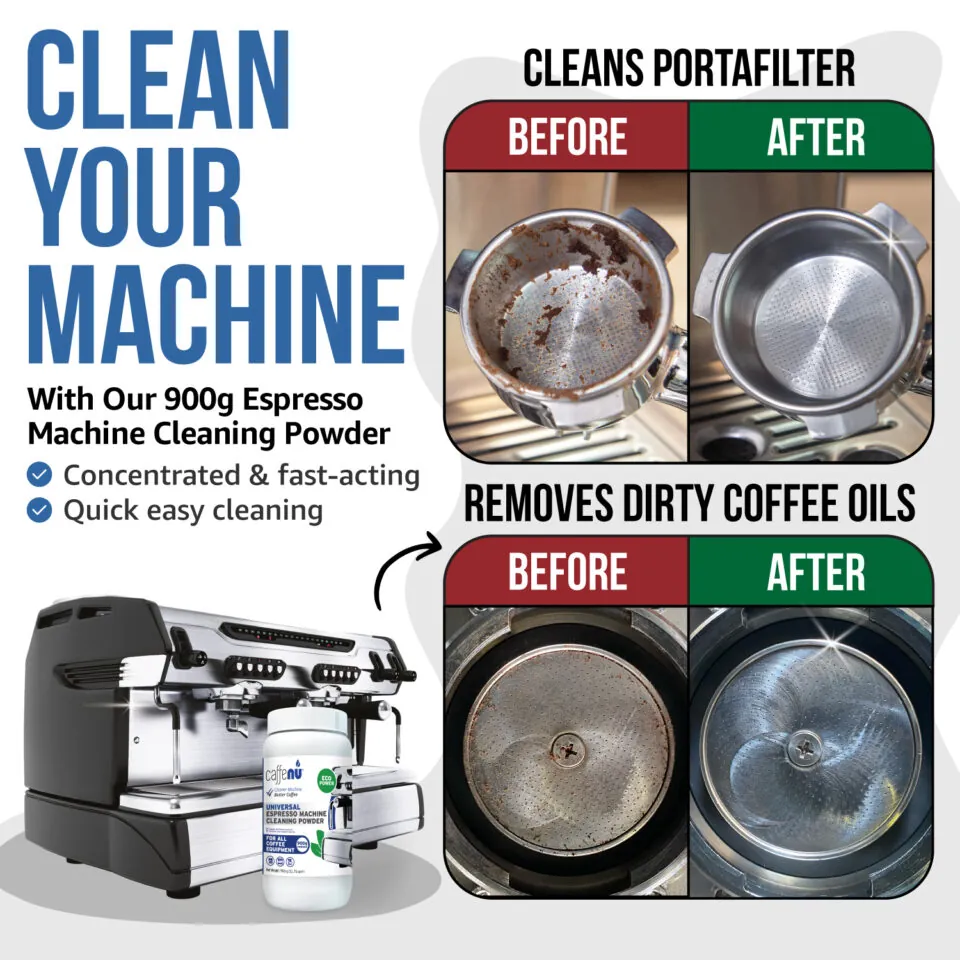
If your machine has a three-way valve, insert the blind basket into the portafilter, add a quarter teaspoon of espresso machine cleaning powder, and lock the portafilter into the group head.
-
Run the pump for ten seconds, stop for ten seconds, and repeat five times. You should hear the three-way valve release pressure with a hiss each time you stop.
-
Remove the portafilter and rinse the group head by running clean water through it for ten seconds. Repeat the backflush cycle once more with clean water and no powder, using the same ten-second on, ten-second off pattern.
-
Wipe the steam wand with a damp cloth immediately after every use, and purge it by opening the steam valve for two seconds before and after steaming milk. Once a week, soak the wand tip in hot water and wipe it clean.
-
Empty and rinse the drip tray and water tank weekly. Refill the tank with fresh water before you make your next shot.
The judgement call is the rinse water. If the water running from the group head still looks cloudy or smells of old coffee after step six, backflush again with clean water until it runs clear. A machine that looks clean but still smells stale isn’t clean yet.
The variations at a glance
One lead sentence sets up the table: your cleaning routine changes with how much you use the machine and what kind of water you have.
| Situation | What to do | What it takes | What to watch for | | Light use, one or two shots a week | Rinse after each shot; backflush with cleaner monthly | About ten minutes per session | Oily residue in the basket | | Daily use, two to four shots | Backflush with cleaner weekly | About fifteen minutes per session | Bitter or sour espresso taste | | Hard water area | Descale every one to three months | Thirty to sixty minutes | Slow heating, weak steam | | Soft water area | Descale once or twice a year | Thirty to sixty minutes | White crust in the water tank | | Machine without a three-way valve | Wipe and rinse only; never backflush with a blind basket | Five minutes after each use | Pressure that doesn’t release |
What good cleaning looks like
How experienced people do it
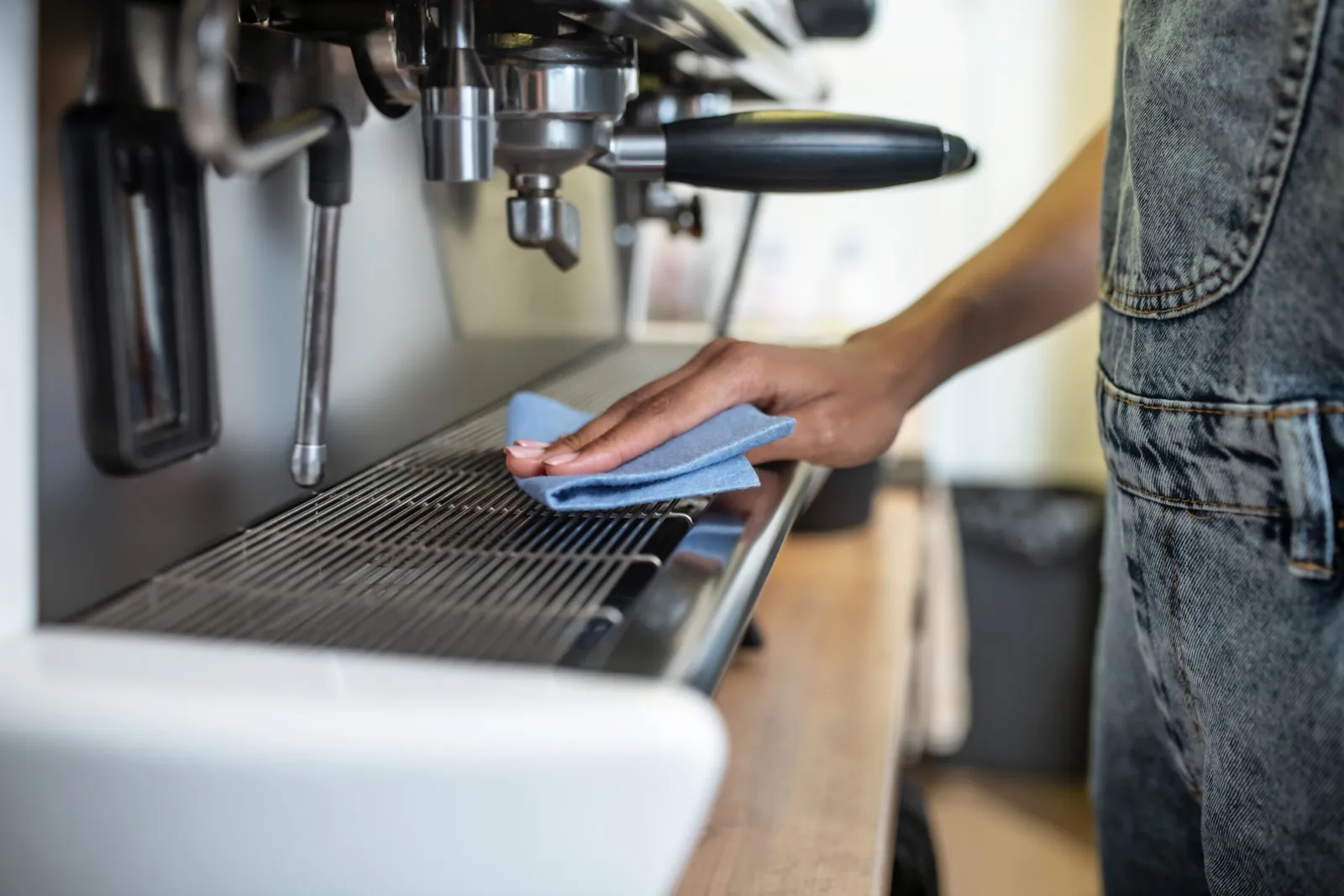
Experienced users backflush with plain water every day after the last shot, and use cleaning powder as recommended by the owner’s manual based on their specific usage. They wipe the steam wand immediately after steaming, while the milk residue is still warm and soft. They check the group head gasket by feel — if it’s stiff or cracked, they replace it before the machine starts leaking.
What beginners skip
Beginners often leave the portafilter locked into the group head between shots, which keeps the gasket compressed and wears it out. They use dish soap on the portafilter basket and don’t rinse it fully, so the next shot tastes of soap. They also descale without rinsing the boiler thoroughly, leaving descaler behind that makes the first few espressos taste sharp and chemical.
What goes wrong and how to fix it
| What you notice | What it usually means | What to do first | How to stop it again | | Bitter, sour espresso | Stale coffee oil in group head | Backflush with cleaner | Backflush weekly | | Weak or sputtering steam | Scale in boiler or wand | Descale the machine | Use filtered water | | Water leaking from group head | Worn or dirty gasket | Clean or replace gasket | Remove portafilter after use | | Machine takes long to heat | Scale on heating element | Descale per manual | Descale on schedule | | No pressure release when backflushing | No three-way valve or blocked valve | Stop and check manual | Don’t backflush this machine |
The rules that apply
Descaling products are aggressive chemicals, and you must follow the manufacturer’s dilution ratios exactly. Using too much concentrate or leaving the solution in the boiler beyond the recommended dwell time can corrode internal brass fittings and degrade rubber seals. This oversight often leads to permanent leaks that require a total gasket replacement.
If your machine is still under warranty, consult the fine print before starting. Some high-end manufacturers mandate that descaling must be performed by an authorized technician to keep your coverage valid. Attempting a DIY cleanse in these cases effectively voids your contract, leaving you responsible for expensive repairs if a pump or sensor fails later.
Distinguish your machine’s architecture before beginning the process. If your unit features a three-way solenoid valve, you must perform a backflush with a specialized detergent. However, if you attempt to backflush a machine lacking this valve, you risk forcing sediment into the group head’s delicate pathways, which can permanently clog the flow restrictor.
If you’re unsure about your machine’s internal configuration, check the manufacturer’s support page rather than guessing. A simple rule applies: if the machine has a portafilter that locks into place with a cam-lever, it likely uses a three-way valve. Applying the wrong maintenance protocol to either type will result in either a buildup of rancid oils or a complete mechanical blockage.
What it costs you
Cleaning an espresso machine costs very little in money. A jar of espresso cleaning powder lasts many months and costs about the same as a bag of coffee. Descaler costs a similar amount and is needed only a few times a year.
The real cost is time. You’ll spend time backflushing and descaling. If you ignore these tasks, the cost shifts from time to hardware. A single solenoid valve clogged by coffee oils is inexpensive to replace relative to the alternative. Worse, scale buildup inside the boiler acts like an insulator, forcing the heating element to work twice as hard to reach temperature. This eventually burns out the element, turning a maintenance chore into a multi-day repair shop visit.
You can lower both costs by using filtered water, which slows scale buildup significantly. If your local water tests above 150 parts per million of total dissolved solids, use a pitcher filter or an inline system. If you live in a soft water area, you can likely scale back descaling frequency by half.
Always wipe the steam wand immediately after every use so milk never hardens onto the tip. If you let milk dry, you must soak the wand in chemical solution, which risks stripping the chrome finish. If the wand feels rough or pitted, you have already waited too long. Clean it while the wand is still warm to avoid the scrubbing that ruins the metal.
Keeping it right after cleaning
After you clean, leave the portafilter out of the group head. This allows the rubber gasket to relax and regain its seal, preventing premature cracking that leads to costly leaks.
Steam and heat degrade chemical compounds, turning effective cleaners into ineffective, clumpy messes that fail to break down oils.
The definitive sign that your machine needs attention is a change in the shot. If your flow rate slows by more than five seconds compared to your baseline, or if the steam pressure feels sluggish, don’t wait for your monthly maintenance date. Scale buildup happens faster in areas with hard water, often requiring a deep clean every four to six weeks rather than the standard three months.
If your espresso tastes consistently bitter despite using fresh beans and a clean grinder, the culprit is likely old coffee oils trapped in the shower screen. Run a backflush cycle immediately. You should also check the group head gasket for visible debris after every five uses. If you see grounds clinging to the screen, wipe them away with a damp cloth before they bake into the metal.
Treat your machine like a living tool rather than an appliance on a schedule. If you pull more than four shots a day, increase your cleaning frequency by fifty percent. If you pull fewer than three shots a week, backflush with plain water after every use to prevent stagnant water from souring the internal lines.
When this isn’t the right approach
If your espresso machine is leaking water from the base, not heating up, or making grinding or banging noises, cleaning won’t fix it and you should stop. Those are mechanical or electrical faults that need a technician. Opening the housing yourself can void the warranty and, on some machines, expose live parts. If your machine has a built-in automatic cleaning program, follow the manual instead of these steps; the machine’s own cycle is calibrated for its specific boiler and pump.
Distinguish between a blockage and a failure by checking the flow rate. If the water comes out as a thin, sputtering mist rather than a steady stream, you’re likely dealing with a simple scale buildup that manual cleaning can resolve. If no water emerges at all despite the pump running, the internal solenoid valve is likely seized. Don’t attempt to force a descaling solution through a completely blocked system, as the pressure buildup can rupture internal gaskets.
Many users mistakenly assume that a machine’s failure to reach temperature is a sign of a dirty sensor. In reality, this is almost always a blown thermal fuse or a failed heating element. If the machine remains cold to the touch after ten minutes, stop immediately. Replacing these components requires specialized tools to ensure the pressure seal remains intact. A botched repair here often leads to a catastrophic water leak that ruins the machine’s control board.
Frequently asked questions
How often should i backflush my espresso machine?
Backflush with cleaning powder about once a week if you make two to four shots a day, or once a month if you make one or two shots a week. Rinse the group head with plain water after every session.
How often should i descale my espresso machine?
Descale every one to three months if you have hard water, or once or twice a year with soft water. Check your kettle for white crusty deposits to judge your water hardness.
Can i use vinegar to descale my espresso machine?
No. Vinegar can leave a smell and taste that’s hard to rinse out, and some manufacturers say it can damage seals. Use a descaler made for espresso machines and follow the bottle’s directions.
Is it safe to backflush every machine?
No. Only backflush machines with a three-way solenoid valve. Machines without one have nowhere for the pressure to go, so backflushing can damage them. Check your manual first.
What happens if i never clean my espresso machine?
Coffee oils turn rancid and scale blocks the boiler, so espresso tastes bitter and steam grows weak. The machine can also leak from a worn gasket or fail to heat properly.
Does it matter if i leave the portafilter in the group head?
Yes. It keeps the gasket compressed and wears it out, which can cause leaks. Remove the portafilter after you finish making coffee.
What to do next
Start by wiping the group head and rinsing the portafilter basket after your next shot. If the water from the group head runs clear and the steam is strong, your routine is working.
If the espresso still tastes bitter or the steam is weak after cleaning, stop and contact a technician or the manufacturer’s support.
Most users make the mistake of ignoring a buildup of mineral scale, which acts as an insulator and ruins internal heating consistency. If your machine takes longer than ten minutes to reach operating temperature, the scale is likely already compromising your heating element.
If you live in an area with hard water, you must descale every three months regardless of how the shots taste. If you use filtered or bottled water, you can safely extend this interval to six months.
When the flow rate from the group head is uneven or sputtering, check the dispersion screen for trapped grounds. If you see visible debris, unscrew the screen and scrub it with a soft brush under warm water. If the screen remains clogged after scrubbing, replace it immediately to prevent uneven extraction pressure.

 Mehedi Hasan