
 Mehedi Hasan
Have you ever wondered how many calories sneak into your daily cup of coffee? Whether you’re trying to watch your weight or just curious about what you’re drinking, knowing the calorie count in your coffee can make a big difference.
You might be surprised to learn that while plain black coffee has almost zero calories, the moment you add milk, sugar, or syrups, those numbers can quickly add up. Understanding this can help you enjoy your favorite brew without unintentionally sabotaging your health goals.
Keep reading to discover exactly how many calories are in a cup of coffee and how you can keep your coffee habit both delicious and guilt-free.
Calories In Black Coffee
Black coffee is a popular beverage known for its rich flavor and low calorie content. It contains almost no calories, making it a preferred choice for many people watching their calorie intake. Understanding the calorie content in black coffee helps you make smarter choices, especially if you add extras like sugar or cream.
Calorie Count Per Cup
A standard cup of black coffee, about 8 ounces, contains roughly 2 calories. These calories come from tiny amounts of protein and oils naturally found in coffee beans. Because it has almost no fat or sugar, black coffee is very low in calories. Drinking black coffee will not add significant calories to your diet.
Factors Affecting Calories
Several factors can change the calorie count in your cup of coffee. The brewing method can slightly alter calories, but the biggest change comes from what you add. Sugar, cream, milk, and flavored syrups add calories quickly. For example, a tablespoon of sugar adds about 49 calories. Cream or milk adds fats and sugars, increasing calorie content. Drinking black coffee without extras keeps calorie intake minimal.
Calories In Coffee With Additions
Coffee alone has very few calories, usually just 2 to 5 per cup. But most people add extras like milk, sugar, or syrups. These additions can raise the calorie count significantly. Knowing how much each addition adds helps you manage your daily calorie intake. Let’s explore how common coffee additions affect calories.
Milk And Cream Impact
Adding milk or cream changes coffee calories a lot. A tablespoon of whole milk adds about 9 calories. Heavy cream adds even more, around 52 calories per tablespoon. Skim milk is lower, with about 5 calories per tablespoon. Plant-based milks vary: almond milk has about 7 calories per tablespoon, while oat milk has around 15. The more milk or cream you add, the higher the calories.
Sugar And Syrups
Sugar is a major calorie source in coffee. One teaspoon of sugar adds about 16 calories. Many people add two or more teaspoons, which doubles calories quickly. Flavored syrups are even higher. One pump of syrup can add 20 calories or more. Sweetened syrups also contain extra sugars. These add calories and may affect blood sugar levels. Using less sugar or sugar-free syrups cuts calories.
Popular Coffee Beverages
Popular coffee drinks have different calorie counts depending on their ingredients. A latte made with whole milk has about 120 calories in a 12-ounce cup. A cappuccino is lower, around 80 calories, due to less milk. A flavored frappuccino can contain over 300 calories because of syrups and whipped cream. Black coffee or espresso has the fewest calories, usually under 5. Choosing your drink wisely helps control calories.
Coffee And Weight Loss
Coffee is a popular drink for many people trying to lose weight. It contains very few calories when black. Coffee can support weight loss in several ways.
The natural compounds in coffee help the body burn fat and use energy better. Drinking coffee without sugar or cream keeps calorie intake low. Understanding how coffee affects weight loss helps make better choices.
Metabolism Boost
Caffeine in coffee increases the body’s metabolic rate. This means you burn more calories even at rest. A faster metabolism helps the body use stored fat for energy. Drinking coffee can give a slight boost to daily calorie burn.
Fat Burning Effects
Coffee contains caffeine and chlorogenic acid. These substances help break down fat cells. They also improve how the body uses fat for fuel. This can lead to more fat being burned during daily activities.
Appetite Suppression
Coffee can reduce feelings of hunger for some people. Caffeine affects hormones that control appetite. Drinking coffee before meals may lower calorie intake. This helps avoid overeating and supports weight control.
Exercise Performance
Caffeine boosts energy and focus during workouts. It can increase strength and endurance. Better exercise performance helps burn more calories. Coffee before exercise may improve fat loss results over time.
:max_bytes(150000):strip_icc()/black-coffee_annotated-dc9e981c8fec4d5a9ba5ad5887d06d57.jpg "How Many Calories in a Cup of Coffee: Surprising Facts Revealed 6")
Credit: www.verywellfit.com
Making Coffee Work For You
Coffee can be more than just a morning boost. It can fit into a healthy lifestyle easily. Knowing how to manage the calories in your coffee helps you enjoy it without guilt. Small changes make a big difference in your daily calorie intake.
Make smart choices about what you add to your cup. Pay attention to hidden calories that sneak in. Balance your coffee drinking with good diet and regular exercise. This way, coffee works for you, not against you.
Choosing Low-calorie Options
Start with black coffee. It has almost no calories. Use low-fat or plant-based milk instead of cream. Skip sugary syrups and heavy toppings. Try spices like cinnamon or nutmeg for flavor without calories. These swaps keep your coffee light and tasty.
Avoiding Hidden Calories
Watch out for added sugar and creamers. A tablespoon of sugar adds about 50 calories. Flavored creamers can add even more. Check labels before buying coffee mixes or powders. Avoid extras like whipped cream or chocolate drizzle. These add calories fast and can ruin your goals.
Balancing Coffee With Diet And Exercise
Enjoy coffee as part of a balanced diet. Don’t rely on coffee to replace meals. Eat nutritious foods that fuel your body well. Exercise regularly to burn extra calories. Coffee can boost energy for workouts. This helps keep your calorie balance in check and supports your health.
Common Myths About Coffee Calories
Many people believe coffee itself has a lot of calories. Myths about coffee calories are common and often misleading. Understanding these myths helps you make better choices.
Plain black coffee contains almost no calories. Most calories come from what you add, not the coffee itself.
Is Black Coffee High In Calories?
Black coffee has about 2 calories per cup. It does not add much to your daily calorie intake. The myth that black coffee is high in calories is false.
Do Sugar And Cream Not Affect Coffee Calories?
Sugar and cream add many calories to your coffee. Even a small spoonful of sugar adds about 16 calories. Cream or milk can add 20 to 50 calories or more per serving.
Does Coffee Itself Boost Calories By Speeding Metabolism?
Coffee can increase metabolism slightly but not enough to add calories. It may help burn fat but does not add calories itself. Any added ingredients can outweigh this benefit.
Are All Coffee Drinks Low In Calories?
Many coffee drinks from cafes contain high calories. Flavored syrups, whipped cream, and whole milk increase calories quickly. Specialty drinks often have more sugar and fat than you expect.

Credit: www.drivencoffee.com
Tips To Cut Calories In Coffee Drinks
Cutting calories in coffee drinks can be simple. Small changes make a big difference. Choosing the right ingredients lowers calorie intake. These tips help keep your coffee tasty and light.
Using Alternatives To Sugar
Sugar adds many calories to coffee. Try natural sweeteners like stevia or monk fruit. These have little or no calories. They still provide sweetness without the extra energy. Avoid sugary syrups and flavored creamers. Use just a small amount if needed.
Selecting Milk Substitutes
Whole milk adds fat and calories to coffee. Choose lower-calorie options like skim milk or plant-based milks. Almond, oat, or soy milk often have fewer calories. Check the labels for added sugar. Unsweetened versions are the best choice.
Controlling Portion Sizes
Large coffee drinks usually mean more calories. Order smaller sizes to reduce calorie intake. Limit extra shots of syrup or cream. Drink your coffee black or with minimal additions. Portion control helps maintain your daily calorie goals.
Hidden Calories In Coffee Culture
Coffee itself has very few calories. A plain cup of black coffee usually contains just 2 calories or less. The real calorie load often hides in the extras people add. Sugar, cream, syrups, and toppings can turn a low-calorie drink into a calorie bomb. These additions are common in many coffee shops and at home. Understanding these hidden calories helps you make smarter choices.
Many enjoy coffee as part of social and daily routines. Coffee culture encourages trying new flavors and styles. These often come with extra sugars and fats. This makes counting calories important for those watching their intake. Let’s explore how trendy coffee drinks and seasonal flavors add calories without obvious signs.
Trendy Coffee Drinks
Popular coffee drinks like lattes and mochas usually contain milk and sugar. A standard latte made with whole milk can have 120 calories or more per cup. Adding flavored syrups can increase calories by 50 or more. Whipped cream and chocolate drizzle add even more calories. Iced coffee drinks often have added sugar in syrups or toppings. Many trendy drinks look small but pack a high calorie punch.
Seasonal And Specialty Flavors
Seasonal coffee flavors attract many fans. Pumpkin spice, caramel, and peppermint mochas are top choices. These drinks often contain syrups, sugar, and creamy milk. A medium pumpkin spice latte may have over 300 calories. Specialty drinks use sweet sauces and toppings to enhance taste. The calories hidden in these festive drinks add up fast. Being aware of ingredients helps reduce unexpected calorie intake.
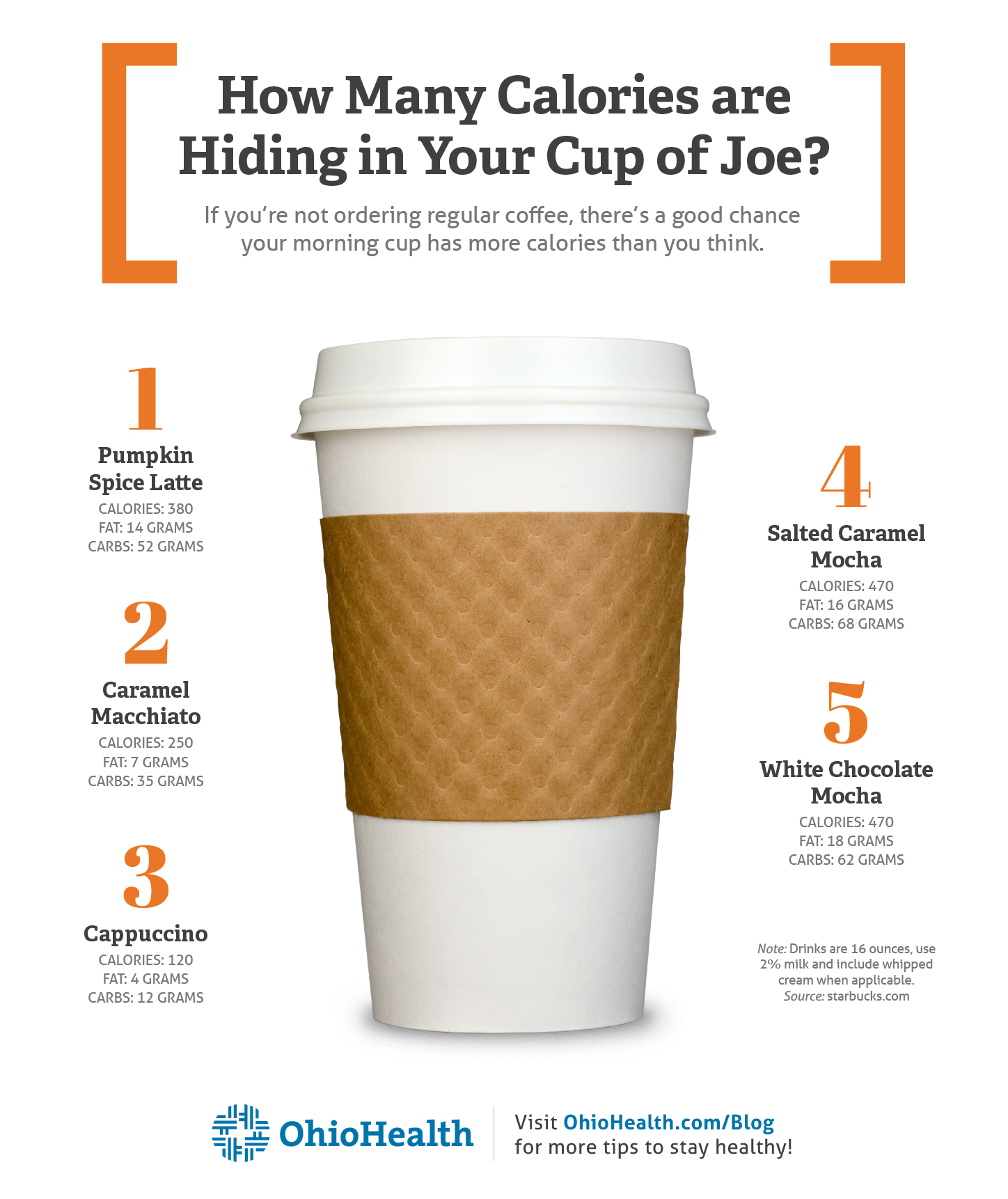
Credit: blog.ohiohealth.com
Frequently Asked Questions
How Many Calories Are In A Cup Of Coffee With Milk?
A cup of coffee with milk contains about 30 to 50 calories, depending on the milk type and amount used.
Is Coffee Good During Weight Loss?
Yes, black coffee can aid weight loss by boosting metabolism and suppressing appetite. Avoid sugar, cream, or syrups.
How Many Calories Are In A Cup Of Black Coffee?
A cup of black coffee contains about 2 calories. It has almost no fat, sugar, or carbohydrates.
How Many Calories Are In Coffee With Creamer?
A cup of coffee with creamer contains about 30 to 70 calories, depending on the creamer type and amount used.
Conclusion
A plain cup of coffee has very few calories, usually just 2 to 5. Adding milk, sugar, or cream increases the calorie count quickly. Knowing these numbers helps you make healthier choices. Drinking black coffee can support weight loss by boosting metabolism.
Keep in mind, added flavors and sweeteners add extra calories. Enjoy your coffee, but watch what you add. Simple changes can keep your coffee low in calories. This way, you enjoy taste without extra energy intake.


 Mehedi Hasan